
No products in the cart.
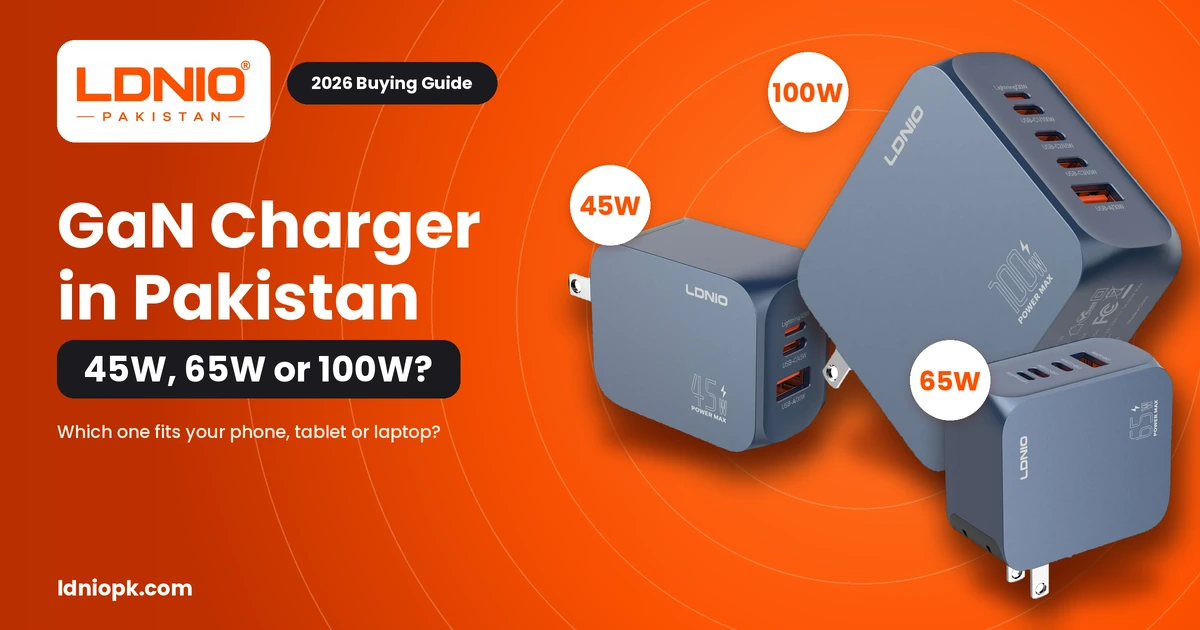
GaN Charger in Pakistan: Which Wattage Do You Really Need (45W, 65W or 100W)?
Walk into any mobile market in Lahore, Karachi or Islamabad and you’ll see chargers labelled 33W, 45W, 65W, 100W, even 140W. Most buyers pick the biggest number, or the cheapest one, and hope for the best. That’s how people end up with a 100W brick for a phone that only needs 25W, or a 33W charger that crawls through a laptop battery.
A GaN Charger in Pakistan is now easy to find, but choosing the right wattage still confuses people. This guide explains what GaN actually is, how many watts each of your devices needs, and what to check (cable, protocol, safety) before you buy.
Answer: 33W covers most phones, 45W is the sweet spot for flagship phones and tablets, 65W suits most laptops, and 100W or more is for larger laptops or charging several devices at once.
What Is a GaN Charger and Why Is It Better?
GaN stands for gallium nitride, a semiconductor material that replaces silicon inside the charger. GaN handles higher voltage and wastes less energy as heat, so a GaN charger can deliver the same power in a noticeably smaller, cooler body.
In everyday terms, that means:
- Smaller and lighter: a 65W GaN charger fits in a jacket pocket, where an old-style 65W laptop brick would not.
- Runs cooler: less wasted energy means less heat.
- One charger for everything: a single compact adapter can handle your phone and your laptop.
GaN isn’t a magic safety feature, though. Safety still depends on the protection circuitry and build quality inside, which is why who you buy from matters.
How Many Watts Do You Actually Need?
Your device decides how much power it draws; the charger only sets the ceiling. A 100W charger will not force 100W into a phone. With USB Power Delivery, the phone and charger negotiate, and the phone takes only what it can handle.
Use this table as a starting point. For an exact number, check the wattage printed on your original charger.
| Device | Typical fast-charging range | Charger to look for |
|---|---|---|
| Earbuds, smartwatches, budget phones | 10–25W | 20–33W |
| Flagship Android phones and iPhones | 20–45W | 33–45W |
| iPads and tablets | 20–45W | 45W |
| Ultrabooks and MacBook Air | 30–65W | 65W |
| 14–15 inch laptops, MacBook Pro | 65–100W | 100W |
| Creator and gaming laptops | 100W+ | 120–140W desktop charger, or the laptop’s own charger |
Some gaming laptops need more power than USB-C can deliver and ship with their own proprietary charger. In that case USB-C is only a backup.
45W vs 65W vs 100W: Which GaN Charger Should You Buy?
33W: Enough for most Phones
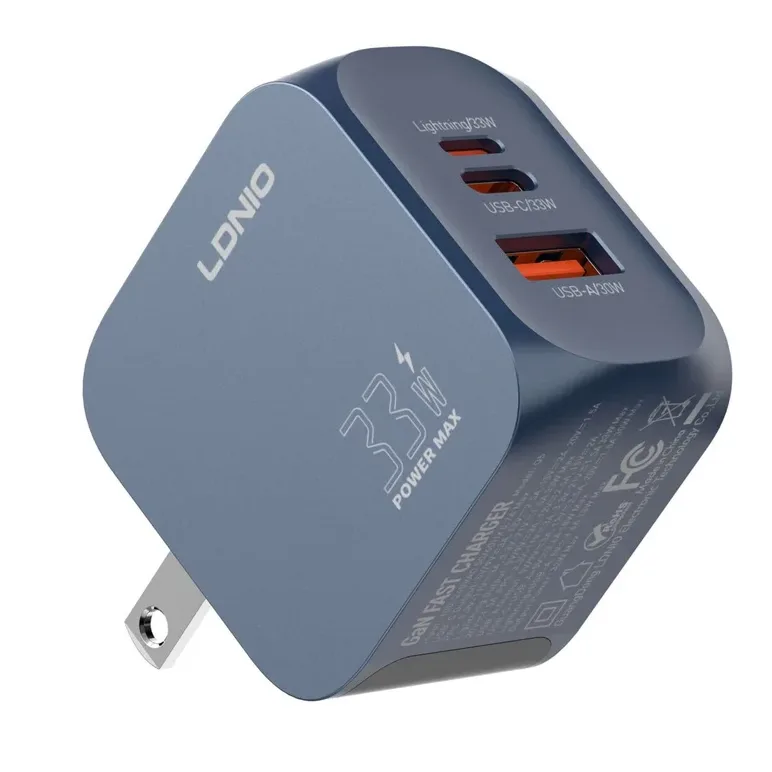
If you only charge phones, 33W is plenty. The LDNIO Q5 33W USB-C/A Super Fast Charger is a simple choice for a phone-only household.
45W: The sweet spot for Phones and Tablets
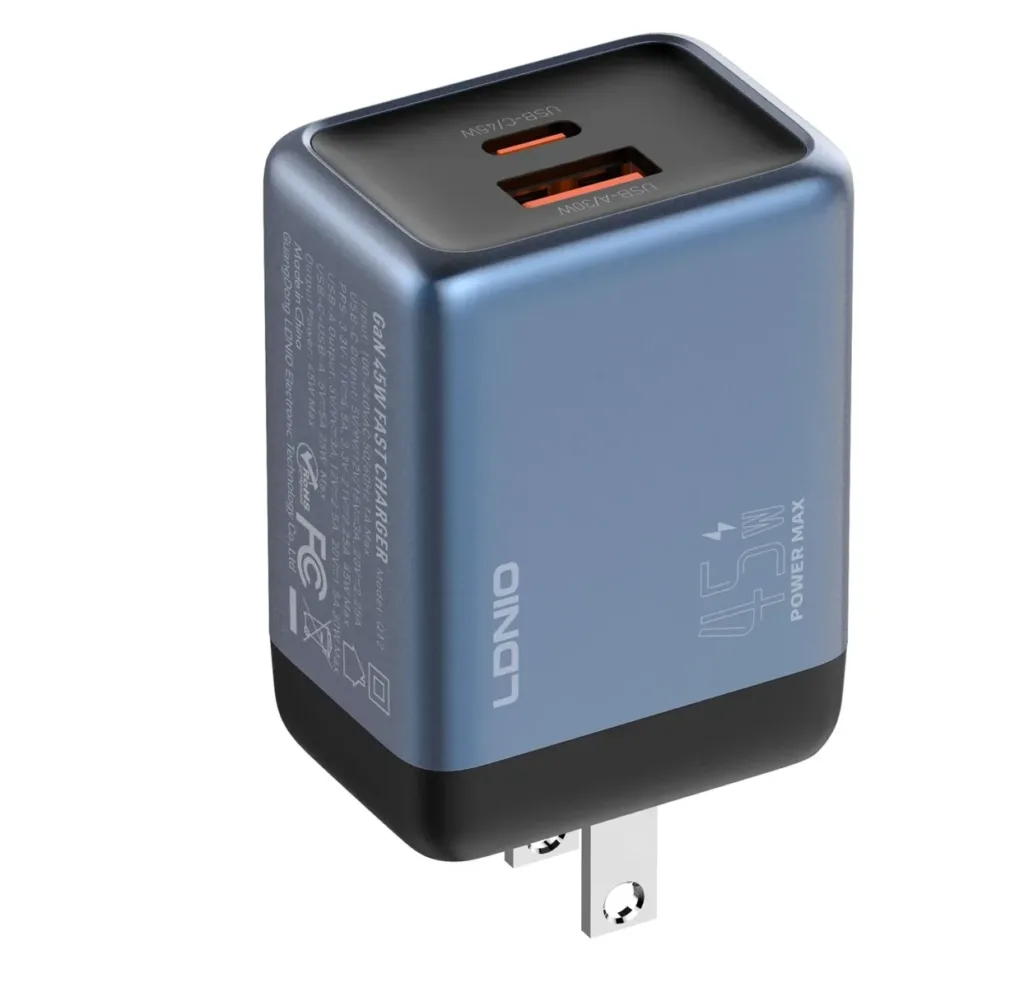
45W covers flagship Android phones, iPhones and tablets, and can slowly top up a small USB-C laptop. The LDNIO Q12 45W GaN charger has a USB-C port up to 45W and a USB-A port up to 30W. Use both ports together and the combined output is limited to 25W, which is normal for dual-port chargers. If you want a built-in Lightning port too, look at the LDNIO Q6 45W GaN charger with USB-C, USB-A and Lightning.
65W: The All-Rounder for Laptops
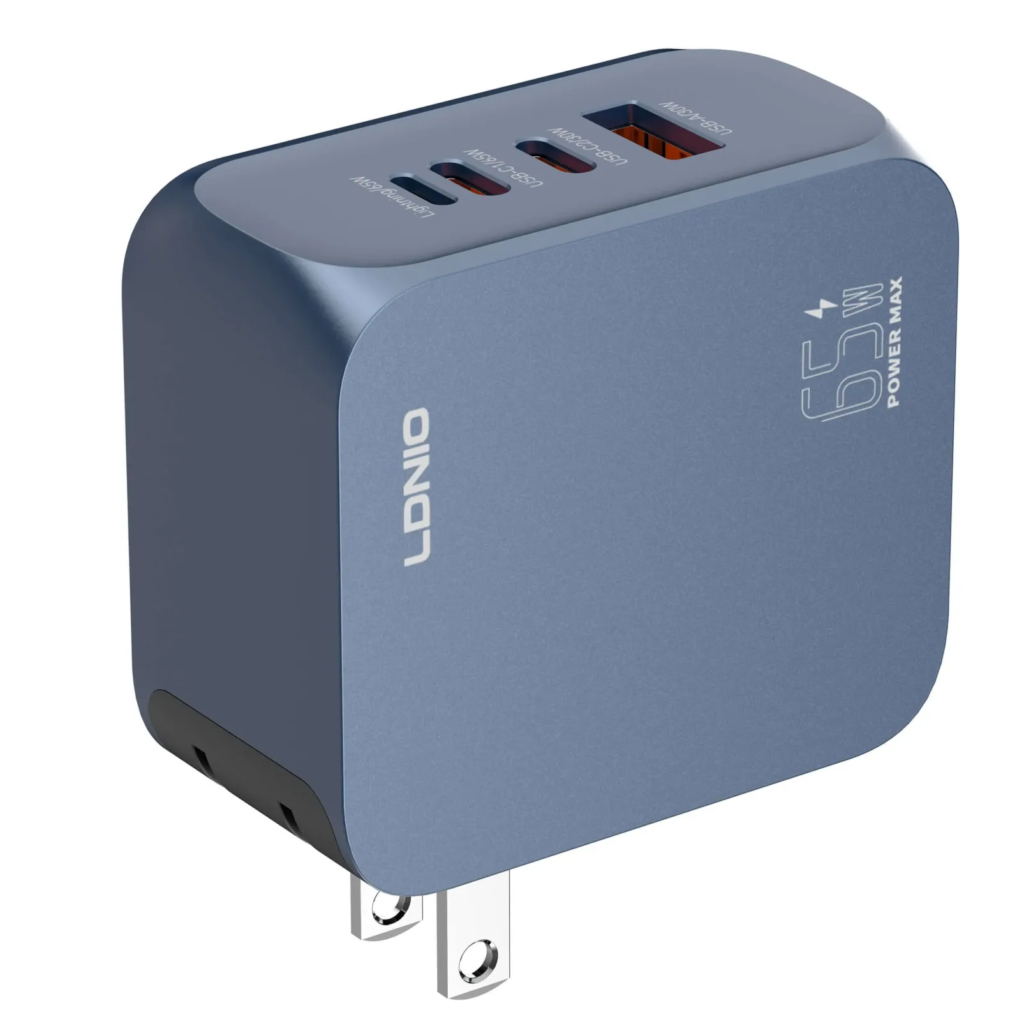
If you own a laptop, 65W is the most useful wattage. It runs most ultrabooks and MacBook Air models at full speed while still fast-charging your phone. The LDNIO Q7 65W PD GaN charger offers USB-C, Lightning and USB-A ports. Prefer a charger that includes the cable? The LDNIO Q2618 65W GaN charger comes with a Type-C to C cable.
100W and above: Bigger Laptops and Multi-Device Desks
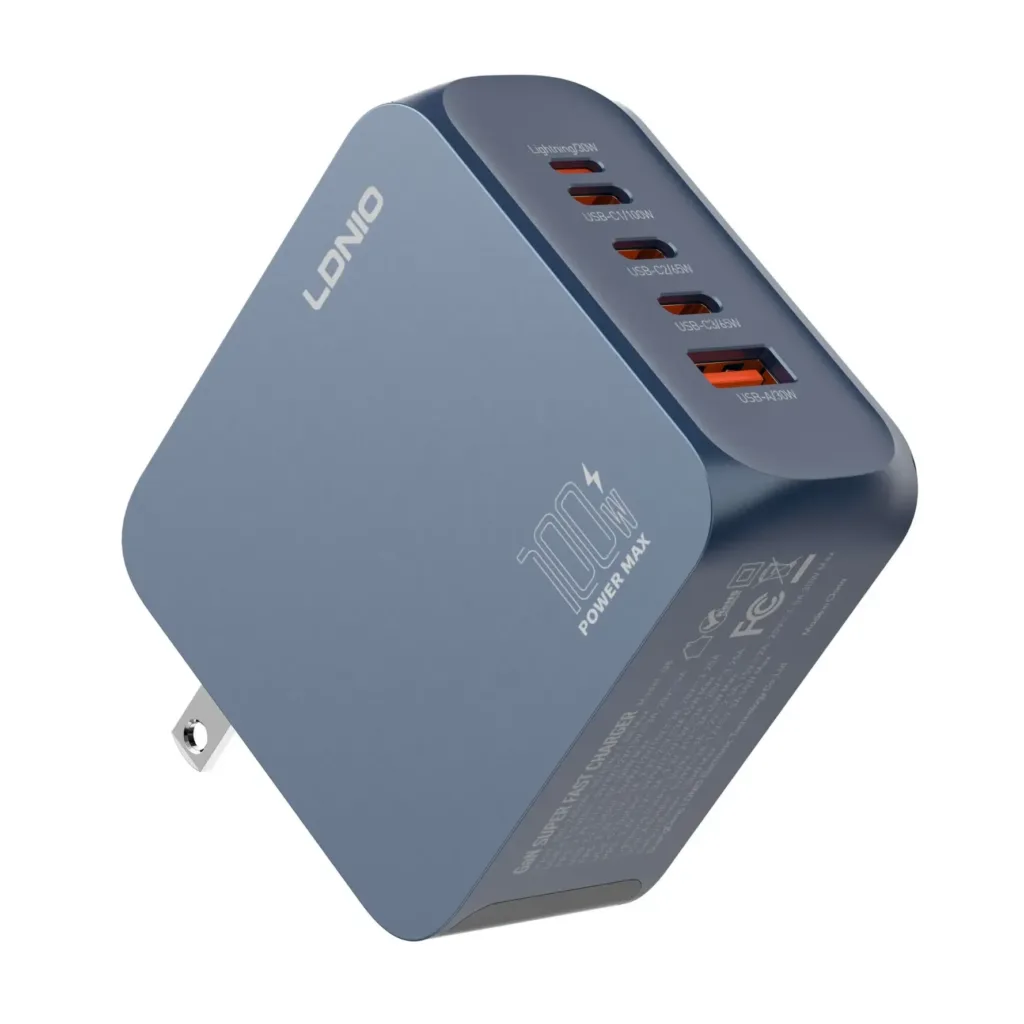
If you have a 14-inch or larger laptop, or you want to charge a laptop, phone and tablet at the same time, go for 100W. The LDNIO Q8 100W PD Super Fast Charger is a straightforward wall option, and the LDNIO Q16 100W GaN charger with extendable cable suits a desk. For a full workstation, the LDNIO Q605 120W multi-port charging station and the LDNIO A6140C 140W GaN desktop charger are worth a look. You can browse the whole range in our desktop chargers collection.
Don’t Forget the Cable
A fast charger is only as fast as its cable. Standard USB-C cables are rated for up to 60W (3A). Anything above 60W, up to 100W, needs a 5A-rated cable with an e-marker chip. That means the thin cable that came with your phone can quietly limit a 65W laptop charger.
Choose a cable rated for the wattage you want: the LDNIO LC902C 65W Type-C to Type-C cable (2 m) or the shorter LDNIO LC441C 65W cable (1 m) for laptops, and the LDNIO LC902I Type-C to Lightning cable with 30W PD for iPhones. See all options in our data cables category.
Check for USB-C PD and PPS Support
Two fast-charging protocols matter most:
- USB Power Delivery (PD): used by laptops, iPhones and most modern phones.
- PPS (Programmable Power Supply): fine-tunes voltage and current in small steps. Some phones, notably certain Samsung models, need PPS to reach their top charging speed, so check your phone’s manual.
The Q12’s published specification lists PPS support on its USB-C port, which is a useful detail if you own a recent Android phone.
GaN Charger Buying Tips for Pakistan
- Buy genuine. Counterfeit chargers are common and can be dangerous. Choose a seller that offers a real warranty. LDNIO PK offers up to one year of warranty, and you can read the details on the shipping and warranty page.
- Protect against voltage swings. Mains in Pakistan is 220–240V at 50Hz, but fluctuations are common. Look for over-voltage, over-current, short-circuit and temperature protection. LDNIO lists a fire-resistant PC shell and 9-level protection for the Q12. Pairing your charger with a surge-protected power strip adds another layer.
- Check the plug. Make sure the plug version fits your sockets, or use a power strip. Some LDNIO models are listed with UK, EU and US plug options.
- Don’t overbuy. A 140W desktop charger is overkill if you only charge a phone.
- Plan for load-shedding and travel. A power bank and a car charger keep you charged when the grid isn’t.
Quick Picks: Which GaN Charger Matches Your Setup?
| If you charge… | Go for |
|---|---|
| One phone | 33W (LDNIO Q5) |
| Phone and tablet | 45W (LDNIO Q12) |
| Phone and an ultrabook or MacBook Air | 65W (LDNIO Q7 or Q2618) |
| A 14-inch or larger laptop | 100W (LDNIO Q8) |
| A full desk with several devices | 120–140W (LDNIO Q605 or A6140C) |
FAQ
Can I use a 65W or 100W charger for my phone?
- Yes. With USB Power Delivery the phone only draws the power it can handle, so a higher-wattage charger is safe. It just won’t charge the phone faster than the phone allows.
Will a higher-wattage charger damage my battery?
- No. The device controls how much current it accepts. Problems come from low-quality or counterfeit chargers with poor protection, not from higher wattage.
Can a GaN charger charge my Laptop?
Yes, if your laptop supports USB-C charging and the charger meets its wattage. Check the output printed on your original charger. A lower-wattage charger may charge very slowly, or not at all while you work.
Is a GaN charger safer than a normal charger?
- Not automatically. GaN makes chargers smaller and more efficient, but safety depends on the protection circuits, materials and manufacturing quality. Buy from a seller that provides genuine products and warranty.
How do I find out how many watts my device needs?
- Look at the label on its original charger. Multiply volts by amps: for example, 20V × 3.25A = 65W.
Conclusion
The right GaN charger in Pakistan comes down to three things: your device’s wattage, a cable that can carry it, and a seller you can trust. Get those right and your phone, tablet or laptop will charge quickly and safely.
Ready to choose? Browse our full range of genuine LDNIO chargers with free delivery across Pakistan, or check the Support and FAQs page if you’d like help picking the right model.
Add comment